
Bubny, Holešovice and Letná: what the new district will bring
A concert hall by the river, new squares by the station, thousands of homes and a park between them. News over the past few months suggests that the transformation of Bubny is taking a more definite shape. For those of us who live or work in Prague 7, or are looking for a home here, the most important questions will be much more everyday: where we will walk, how we will change between transport services, and whether amenities and green spaces will arrive in time alongside the new buildings.
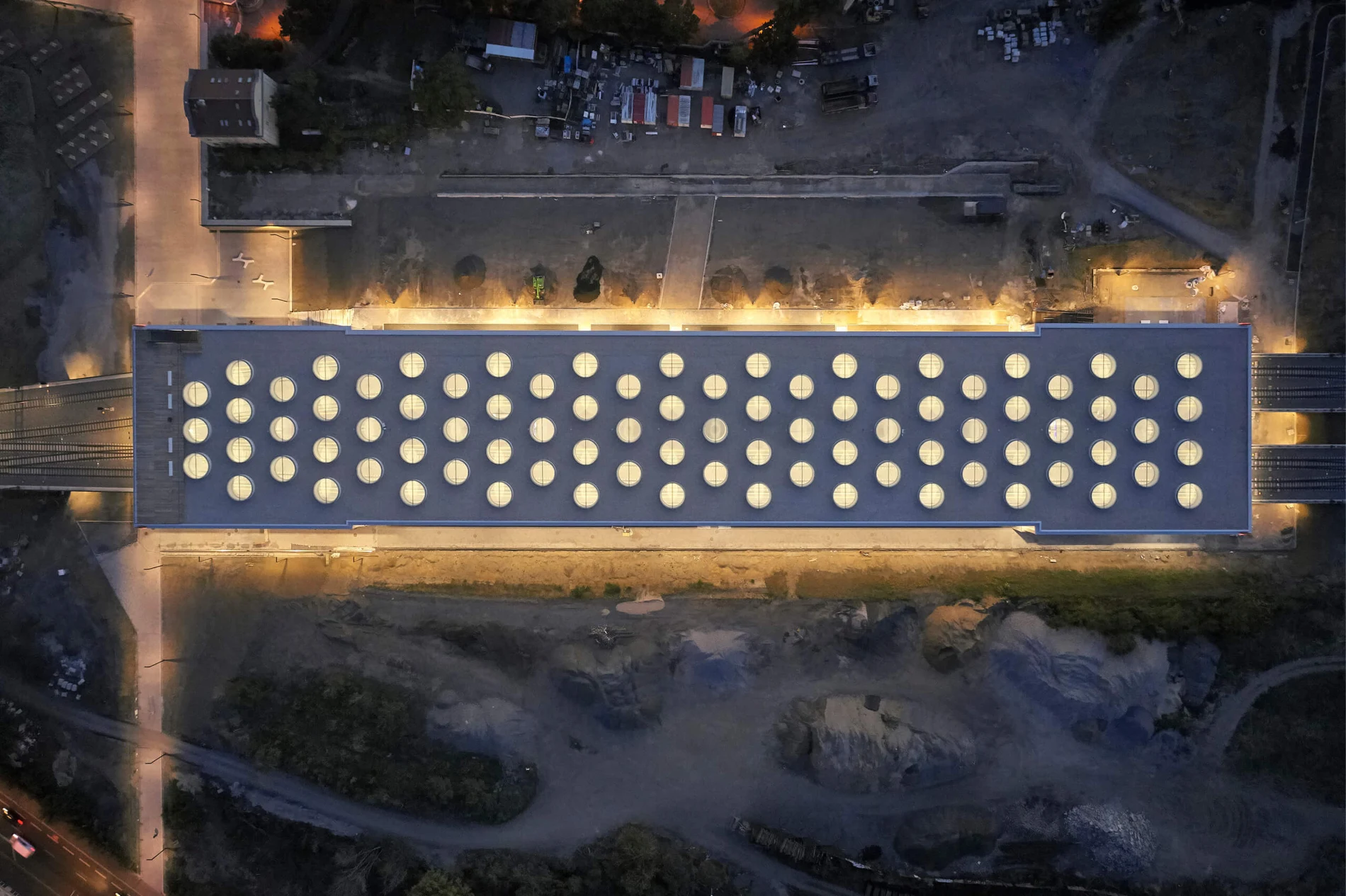
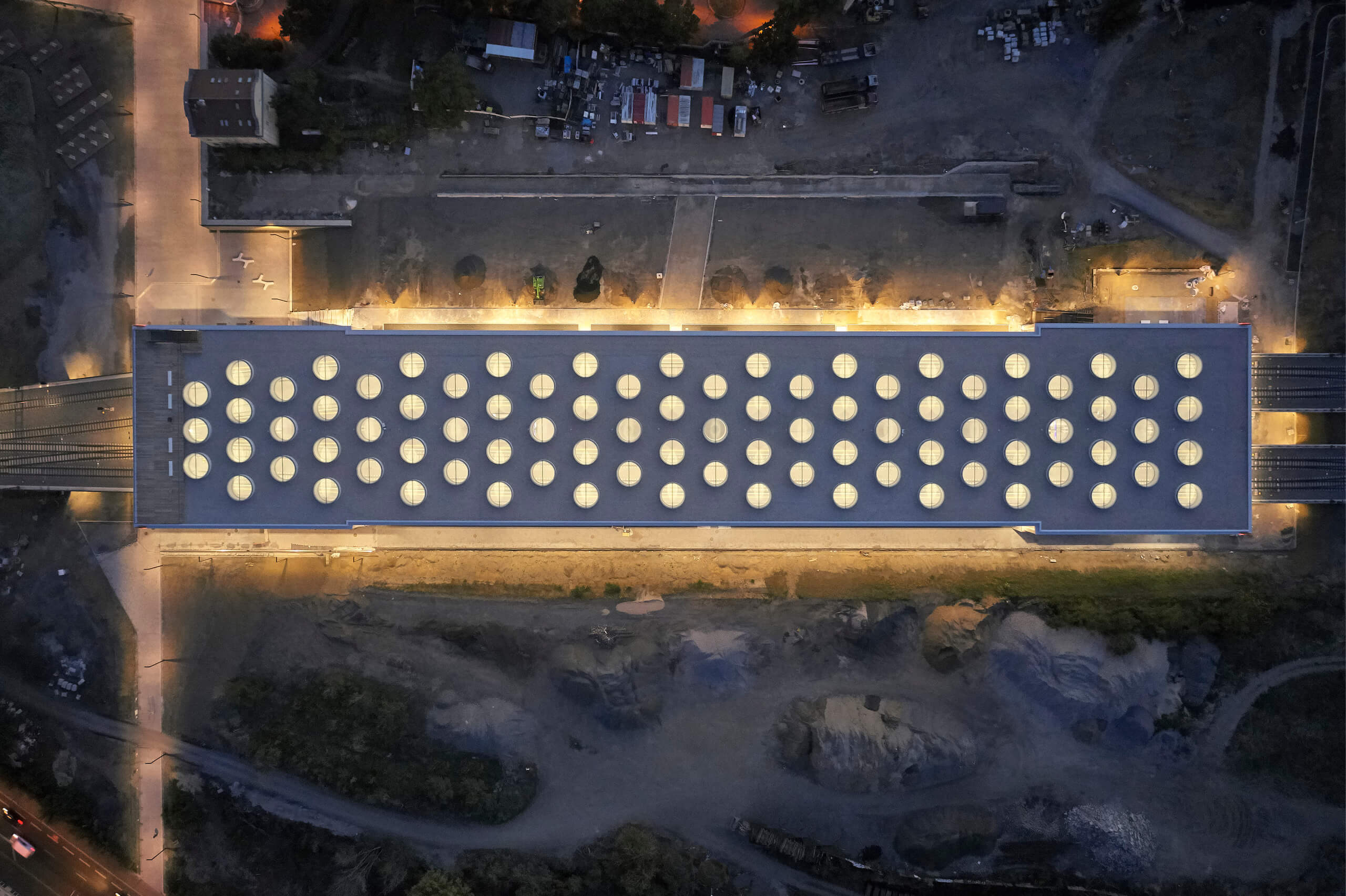
Imagine a journey from the Vltava through Bubny to Nádraží Holešovice. Today we see it as a series of separate stretches: busy Vltavská, the new railway station, extensive undeveloped land and another transport hub to the north. Future projects are intended to fill the spaces between these points with a city. Streets you can walk through. Buildings with shops on the ground floor. Places worth spending time in.
For me, that is the greatest promise of the transformation. Letná and lower Holešovice could become much more natural neighbours. Getting there will, however, take longer than a single electoral term, and there will be neither one investor nor a shared opening date.
What has actually moved forward
The summer and early autumn brought three important steps. In July, Prague 7 approved its comments on the revised Bubny–Zátory II urban planning study. In August, Penta Real Estate announced that it was acquiring a stake in the company holding key land in Bubny. And at the end of August and beginning of September, both ends of the future district moved forward: the concert hall applied for development permission, and the area around Nádraží Holešovice gained a winning urban design.
Each of these steps means something different. The study sets out how the area will be arranged. Changes in investors determine who will prepare and finance development. An application for permission is another stage in preparing a particular building. Winning a competition establishes a direction that still needs to be developed in detail.
Indicative planned capacities, not completed buildings or developments that have already been granted permission. Source: CAMP, updated 17 June 2026.
Prague has a new land-use plan. What does this mean for Bubny?
Prague City Assembly approved the Metropolitan Plan on 28 May 2026. It came into effect on 1 September. This is a significant change: Prague has a new binding framework for development that also directs construction towards brownfield sites within reach of rail transport. Bubny demonstrates why this approach matters — new homes can be built within the city, close to the metro and railway.
The plan itself does not, however, start construction or confirm a move-in date. Individual buildings and transport projects need their own design preparation and the relevant permissions. Nor is the Metropolitan Plan the same as the more detailed Bubny–Zátory II urban planning study, on which Prague 7 submitted comments in July. For residents, the implication is straightforward: the approved framework moves the area forward, but we will only learn the actual order of construction from the subsequent projects and schedules.
An opportunity to reclaim the riverfront
The Vltava Philharmonic Hall, designed by BIG, is intended to offer concert halls, a music library, creative and educational spaces, and public terraces. For someone living nearby, what happens around it could matter just as much: better access to the water and public space you can visit without a ticket.
On 31 August 2026, the project team announced that it had submitted an application for development permission. It expects permission in the first quarter of 2027, construction to begin in the first quarter of 2028, and trial operation in 2033. The latter two dates are plans dependent on the permission process and the selection of a contractor.
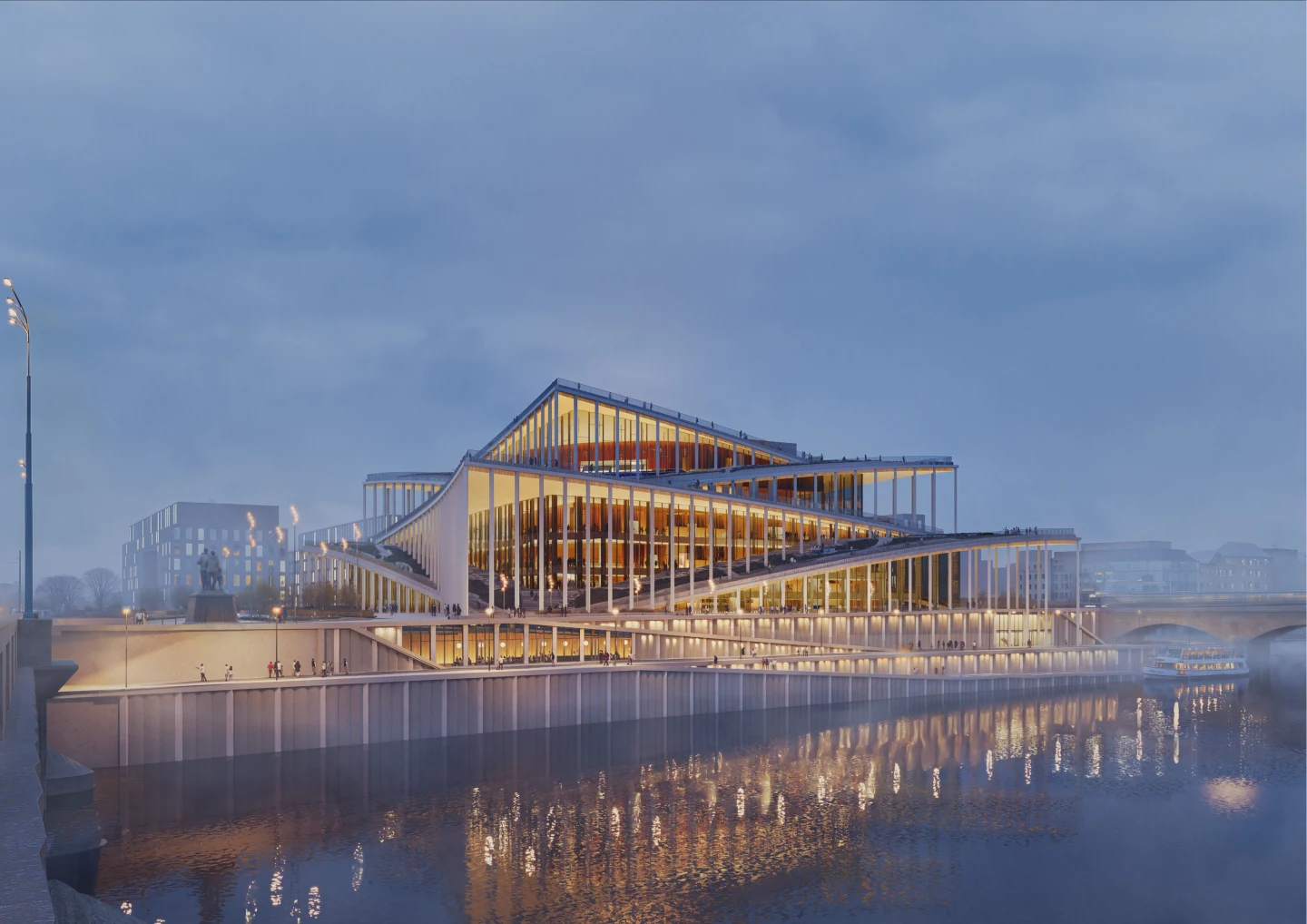

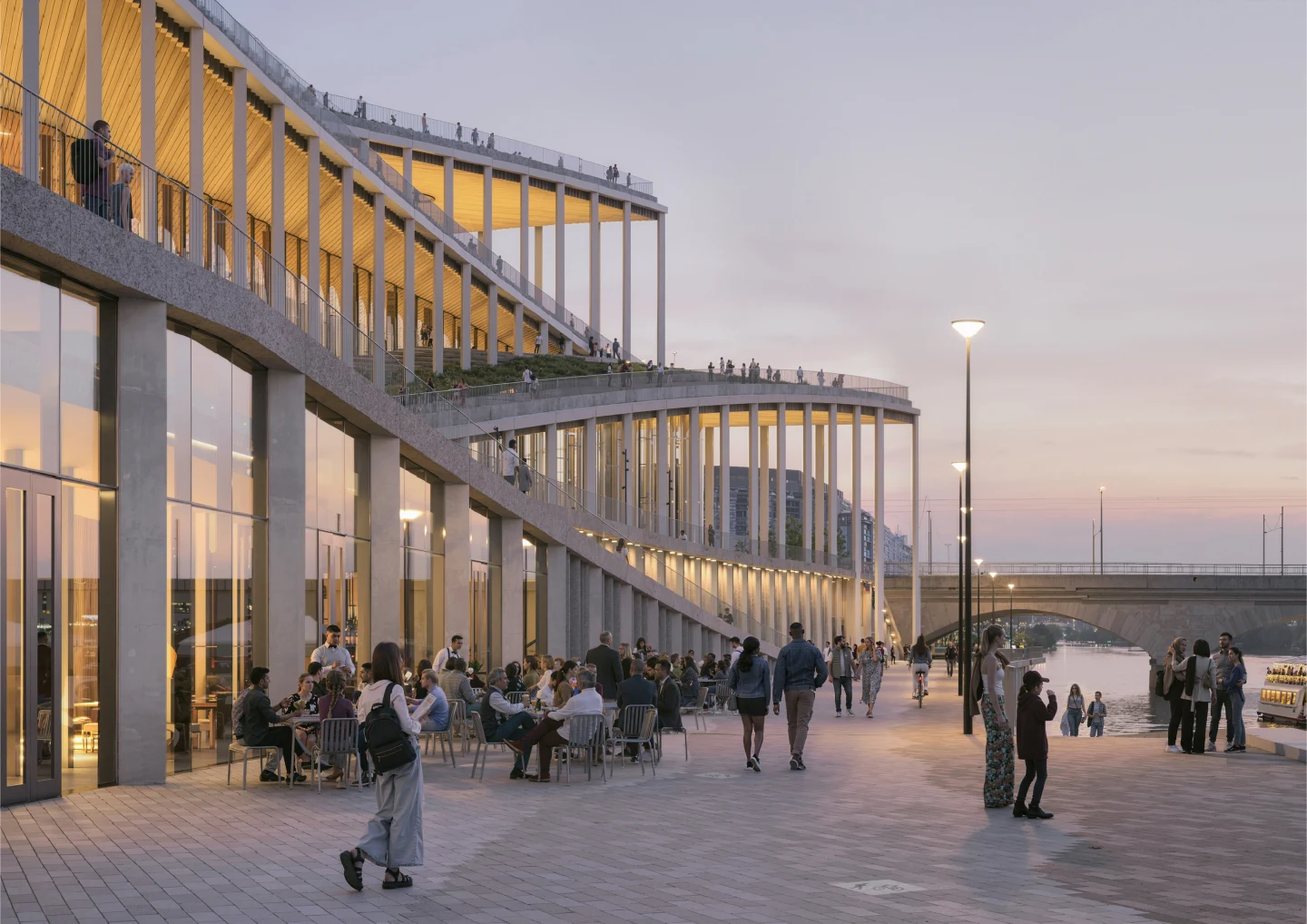

An interesting detail shows how far preparation has progressed: specialists are testing the acoustics of the main hall, which seats 1,800 people, using a physical model at a scale of 1:10. Made by the Czech company AVETON, the model measures approximately 4.9 × 5.8 × 2.5 metres and is being used by Nagata Acoustics. Long before the first concert, very specific attention is already being paid to how sound will reach each listener.
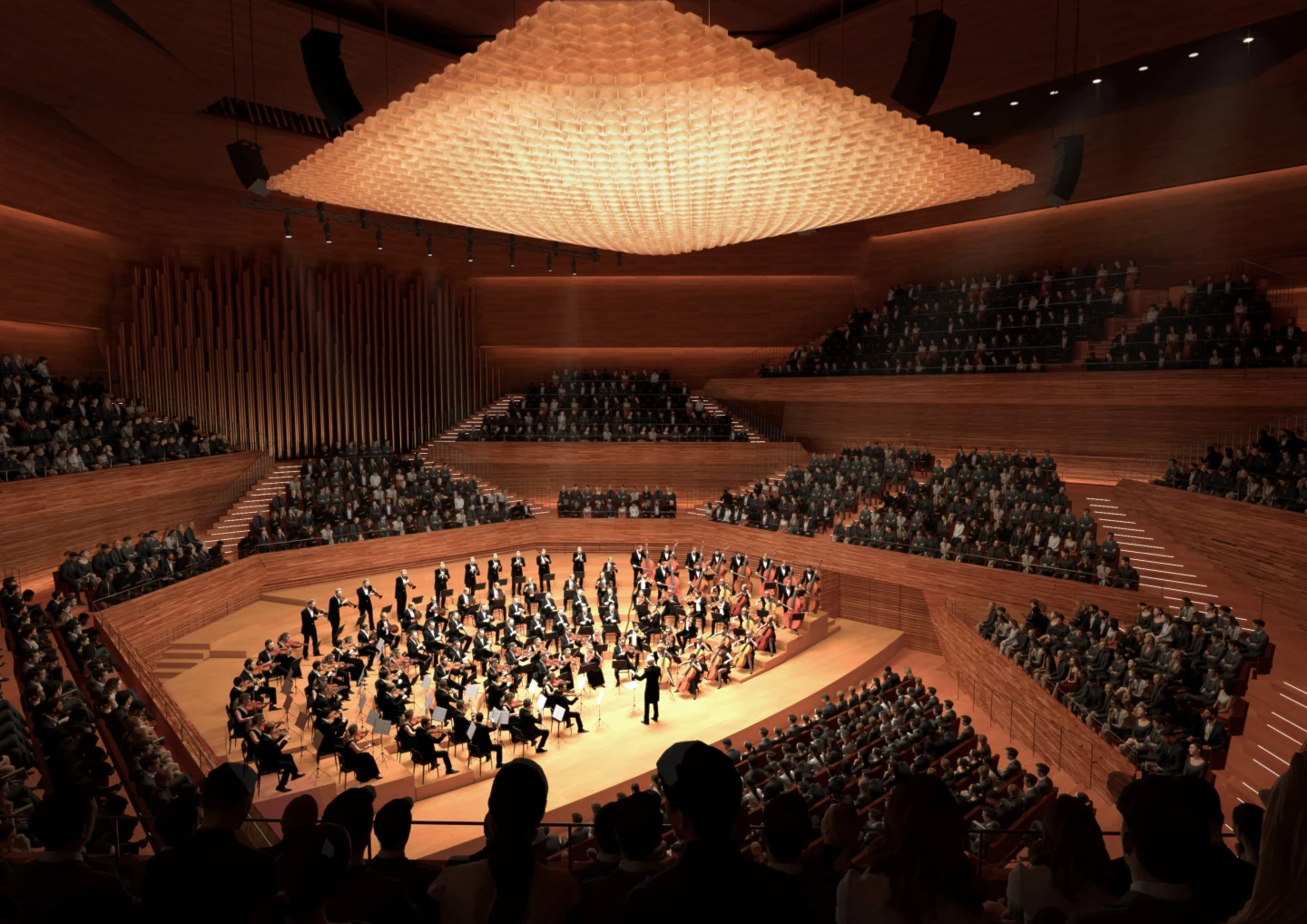

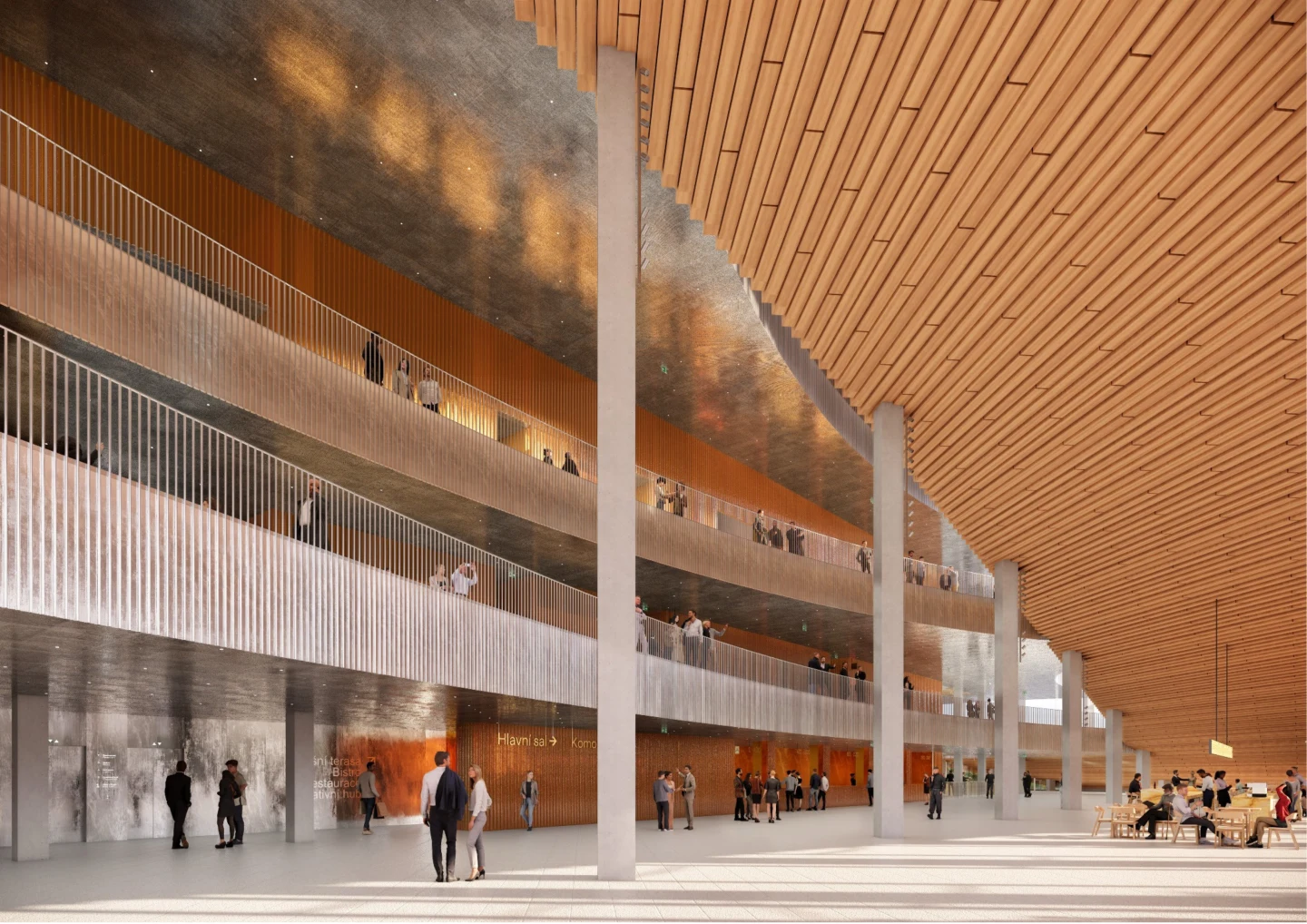

Alongside the architecture, we need to keep an eye on the money. The current official website gives estimates of around CZK 12 billion for the building and around CZK 17 billion including transport works and the surrounding area. Its individual pages differ on the exact figures, so it is fairer to work with these rounded amounts rather than a supposedly definitive price. An August report by Seznam Zprávy also raised questions about the cost of project management and financing. For me, a clear budget and scrutiny of how it changes are part of confidence in the whole project.
The metro is to change. This does not mean two new stations
At Vltavská, plans include rebuilding the concourse and connecting access routes, modifying tram stops and altering road traffic. Some road traffic is intended to run through a tunnel in the area of nábřeží kapitána Jaroše. The aim is to free up the surface to connect the city with the river.
At Nádraží Holešovice, the new design addresses connections between the existing metro station, trains, trams, buses and surrounding development. Both projects concern the transformation of existing transport hubs. They do not imply the creation of two additional stations on metro line C.
Construction in such a complex location will involve disruption. However, a precise, binding timetable for future closures associated with the concert hall was not published in the materials reviewed. Those materials cannot honestly tell us today which month a particular tram will stop running or how long metro access will be closed.
We should not confuse this with the summer closures of 2026. Metro line C was restricted from 4 to 10 July because of signalling upgrades. Repairs to Hlávkův Bridge were scheduled for 11 July to 31 August. These were separate transport works, not the start of construction of the concert hall.
The new Bubny station is a beginning, not the finished picture
The new railway station has been operating since August 2025 and forms part of the upgraded railway route towards Kladno and, in future, the airport. A completed station does not in itself mean a completed airport connection or finished surroundings.
The architects have also prepared the station structure for a further phase: construction above the tracks and along its western edge. This explains why an extension above the station is already being discussed while the building is new. I have no documented firm start or completion date for this next stage. Technical readiness is a future possibility, not evidence that work will begin next year.
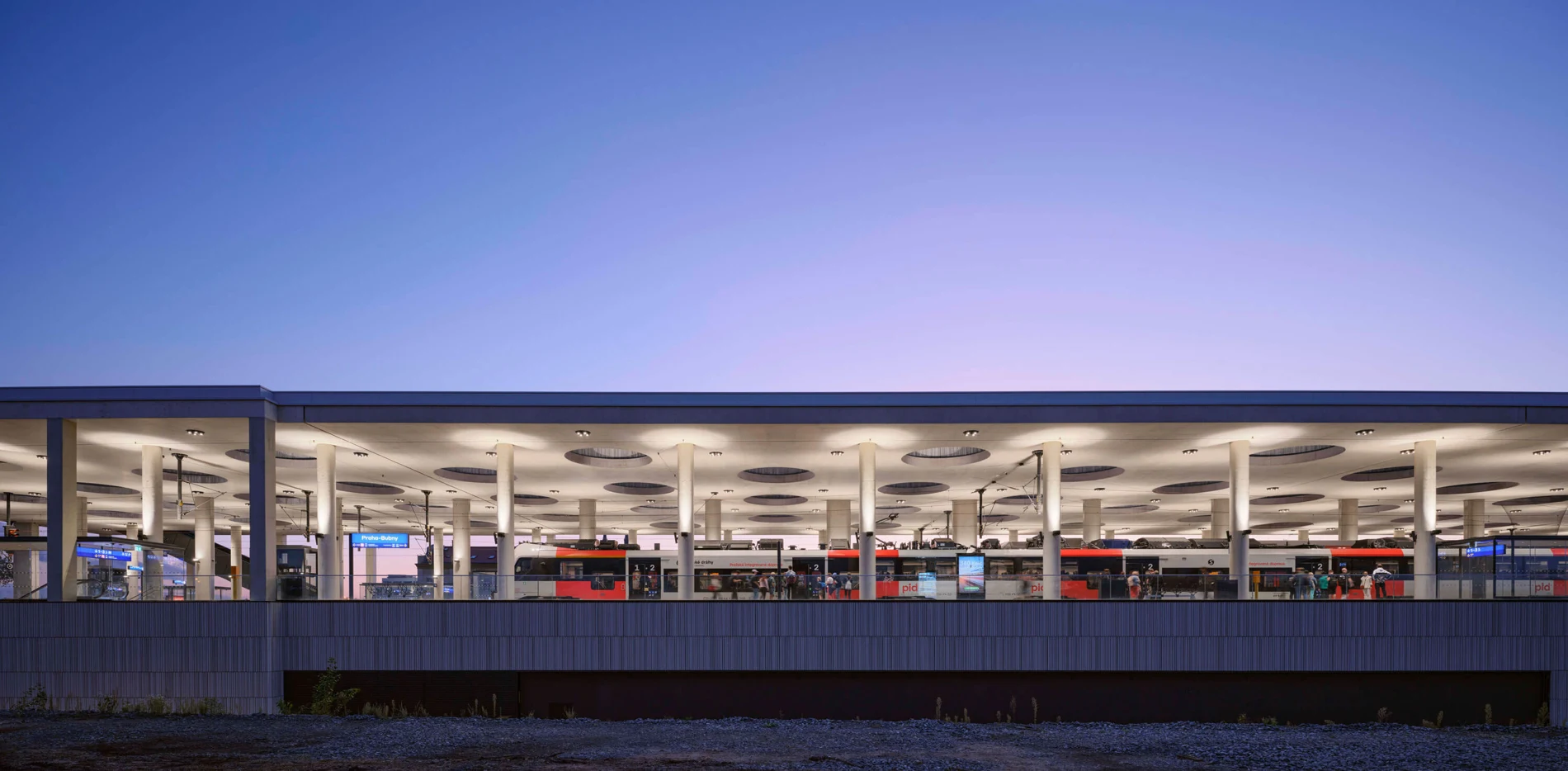
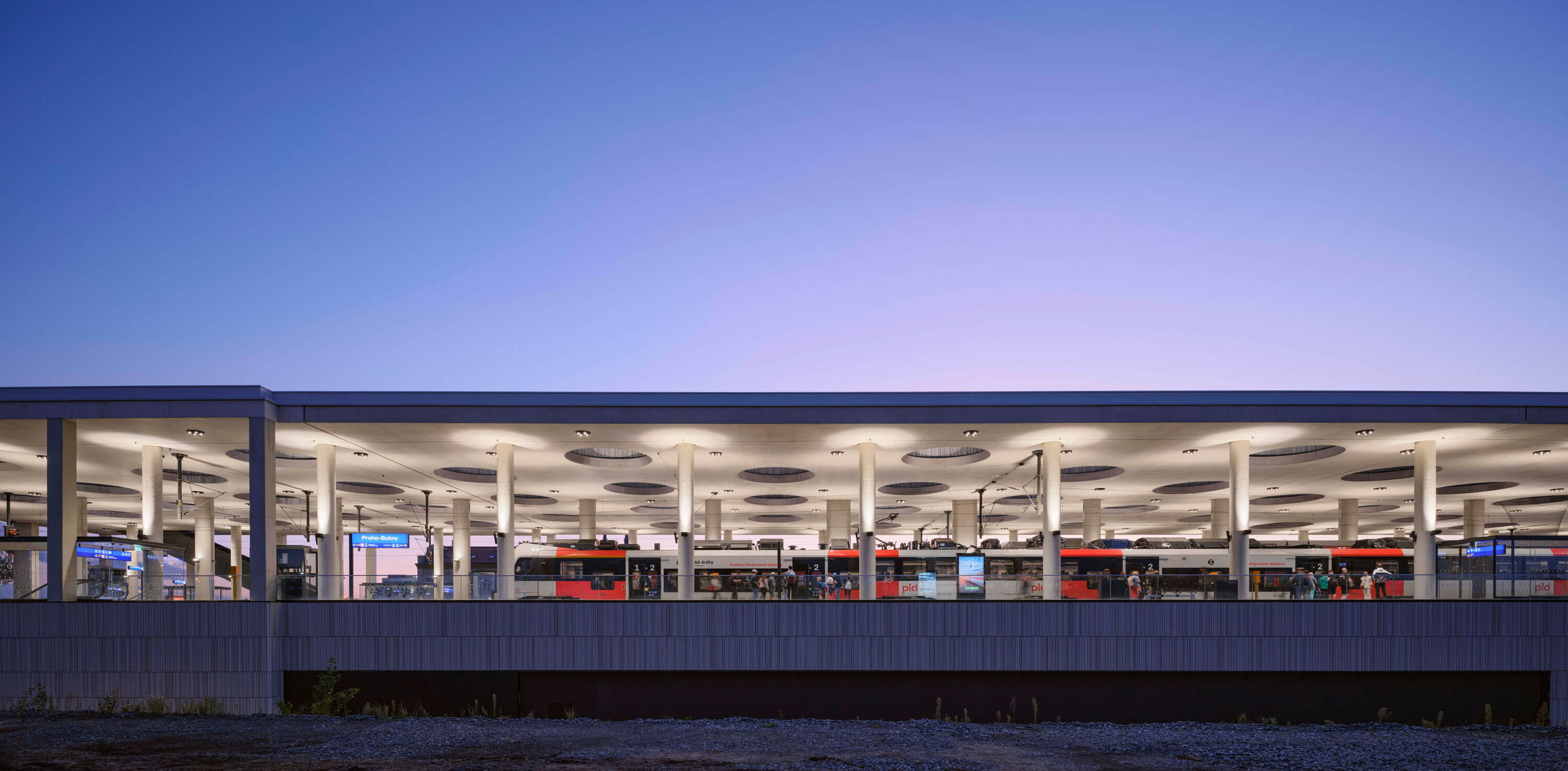
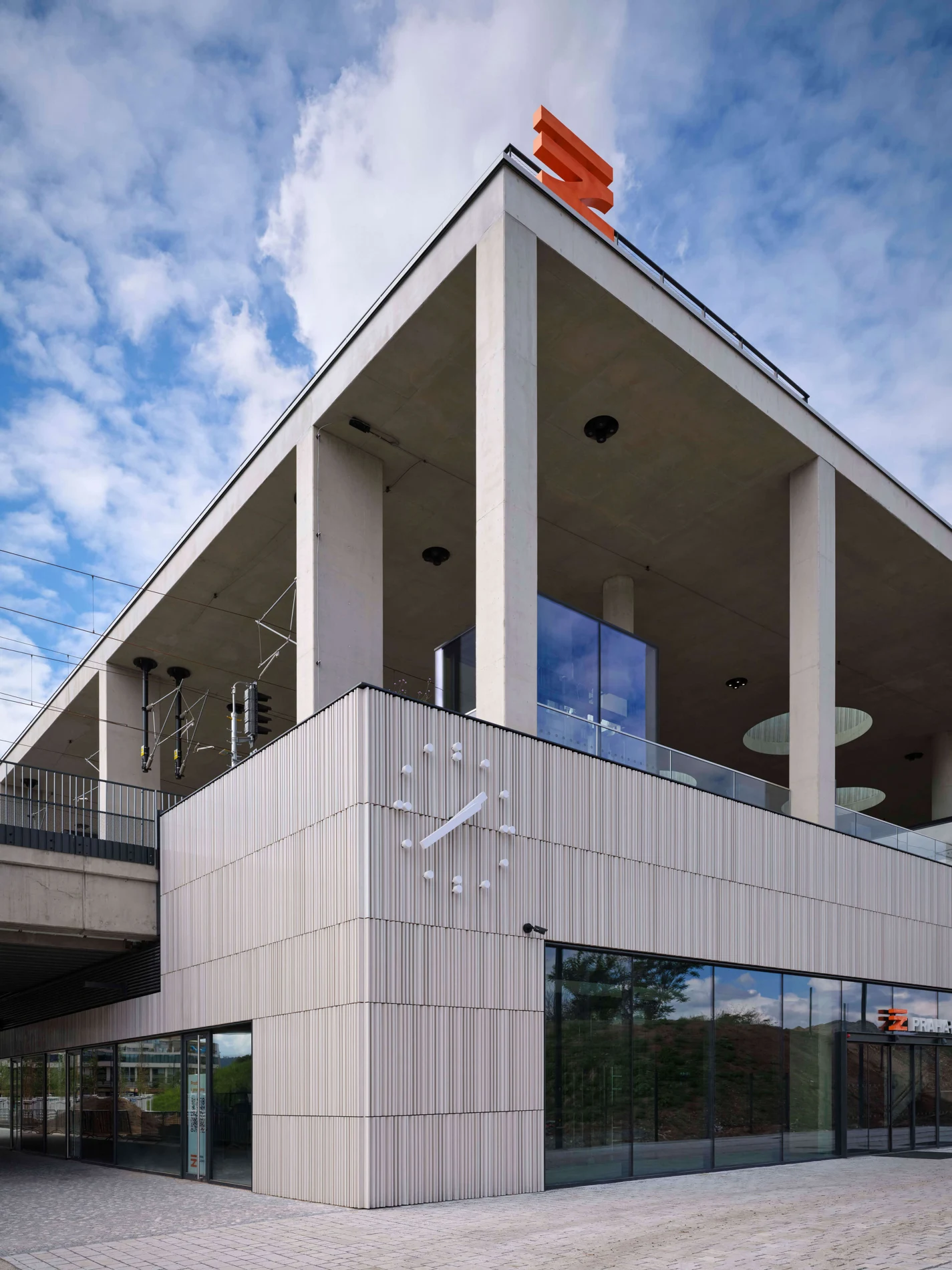
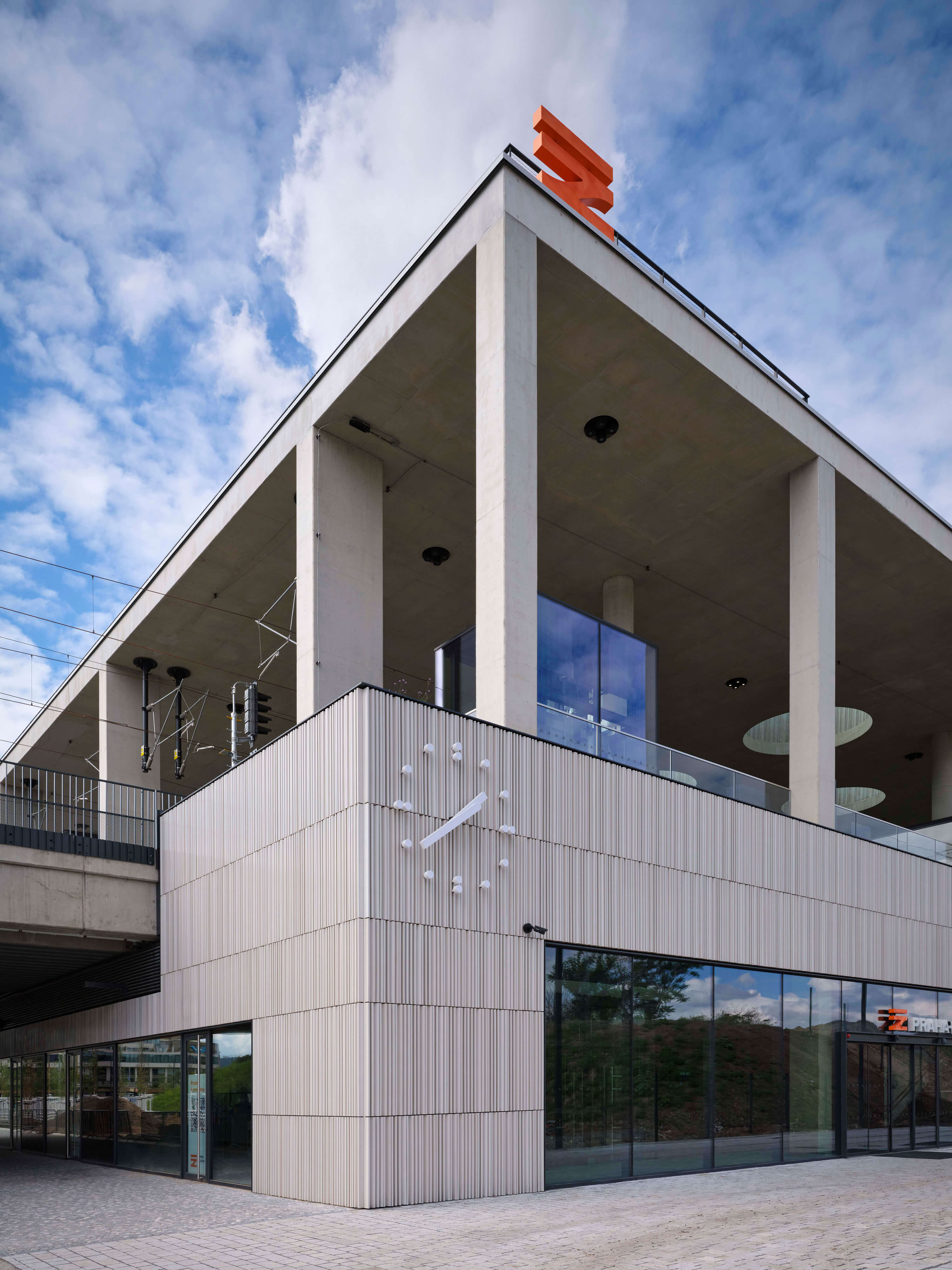
Meanwhile, the railway is gradually changing its role in the neighbourhood. The passage connecting Veletržní with Dělnická, named after Nicholas Winton, opened on 3 September 2024. Connections like these can mean more to local people than a distant view of a new landmark. It is not, however, one completed pedestrian street running from the concert hall all the way to Holešovice station. Future permeability will depend on linking several different streets and public spaces.
A real neighbourhood is to grow between the stations
CAMP’s updated overview envisages approximately 10,000 homes for 22,500 residents in Bubny–Zátory. A park of around six hectares, or 60,000 square metres, is intended to run through the centre. The main residential development in the southern section is approximately six to eight storeys high; the north is intended to include more prominent taller elements in some places.
At this scale, the quality of individual buildings is no longer the only consideration. We need to know when schools and nurseries will be operating, where children can walk safely, how parks will open, and whether ground-floor premises will offer services that current residents of the surrounding area can also use.
In August 2026, Penta announced the acquisition of a 50% stake in HoldCo Bubny, with a further 35% held by AKIPIA and 15% remaining with J&T. The investor gives an investment of around CZK 90 billion and a timeframe extending to 2050 for its development. This figure relates to the development scheme; it is neither the cost of the entire transformation of Prague 7 nor the city’s budget.
Who has joined HoldCo Bubny
Stakes according to the announcement of 13 August 2026. The chart concerns this company, not all land in Bubny or the Nové Holešovice joint venture.
Who is responsible for which part of the story
Penta Real Estate is to lead development of the land in HoldCo Bubny, according to the August announcement. AKIPIA, backed by Michal Strnad, Tomáš Brzobohatý and Marek Šmrha, joins as an investment partner. J&T retains its role as a financial partner. The announced scheme combines housing, offices, accommodation, retail and public amenities. The published long-term timeframe does not yet replace schedules for individual blocks.
CPI Property Group plays several roles in this story. Older reports described it as the owner of a large part of Bubny, but its half-year report records the sale of its remaining interest in HoldCo Bubny to partner KIPEKEE INVESTMENTS on 11 June 2026. The ownership position in January therefore cannot be presented as the position today. CPI is also named among the collaborating investors in Nové Holešovice and, through CPI Rezidence, is developing the neighbouring Delarg project at the corner of Dělnická and Argentinská. In September, it announced the start of construction there.
EP Real Estate acquired Karlín Group’s stake in the Nové Holešovice project in March 2026. Prague Public Transit Company holds a 25% stake in the joint venture. September materials for the northern area describe collaboration between CPI, EP Real Estate, Penta and AKIPIA, alongside DPP, Prague and Prague 7. They do not provide a complete current percentage breakdown of all private participants, so I have not calculated one. Karlín Group helped prepare and organise the competition; this role must be distinguished from ownership.
The public side of the transformation also involves the City of Prague for the concert hall, Správa železnic (the Railway Administration) for railway infrastructure, and the Bubny Centre for Memory and Dialogue at the historic station. Prague 7 brings the needs of the surrounding neighbourhood into the preparation process. This is an overview of the main publicly documented participants, not a land-registry list of the owners of every plot.
How the projects are intended to connect
A diagram of connections from south to north, not a map of landholdings. Public routes and transport link the projects; each has its own preparation process.
These schemes will need to connect above all at the boundaries between sites: through passages, streets, utilities and interchanges. In the south, the city is to open towards the river by the concert hall; in the centre, it is to provide housing and a park; in the north, a convenient transport hub. None of these parts can make the whole work on its own. From a neighbour’s perspective, it will matter whether a route remains passable while an adjoining investor is still building, and who maintains the public space in the meantime.
Nor can figures from individual projects simply be added together. The urban planning study, the investor’s portfolio and the competition around the northern station have different boundaries and may overlap geographically. Ten thousand homes in the study and a similar number in a developer’s announcement are therefore not automatically two separate amounts of new development.
Nové Holešovice: two squares and an easier interchange
In the north, the transformation took a more definite form on 8 September 2026, when the jury selected the proposal by CHYBÍK + KRIŠTOF. The area addressed around Nádraží Holešovice covers approximately 83,000 square metres, or 8.3 hectares. The stated capacity of up to 320,000 square metres of gross floor area is the sum of floor areas, not the size of the site or development that has already been granted permission.
The proposal includes two squares, each at least 3,500 m², arched halls to make changing between services easier, and a prominent rotated high-rise building. These are to be complemented by homes, offices, a hotel, a nursery, shops and other services. DPP holds a quarter stake in the joint venture.
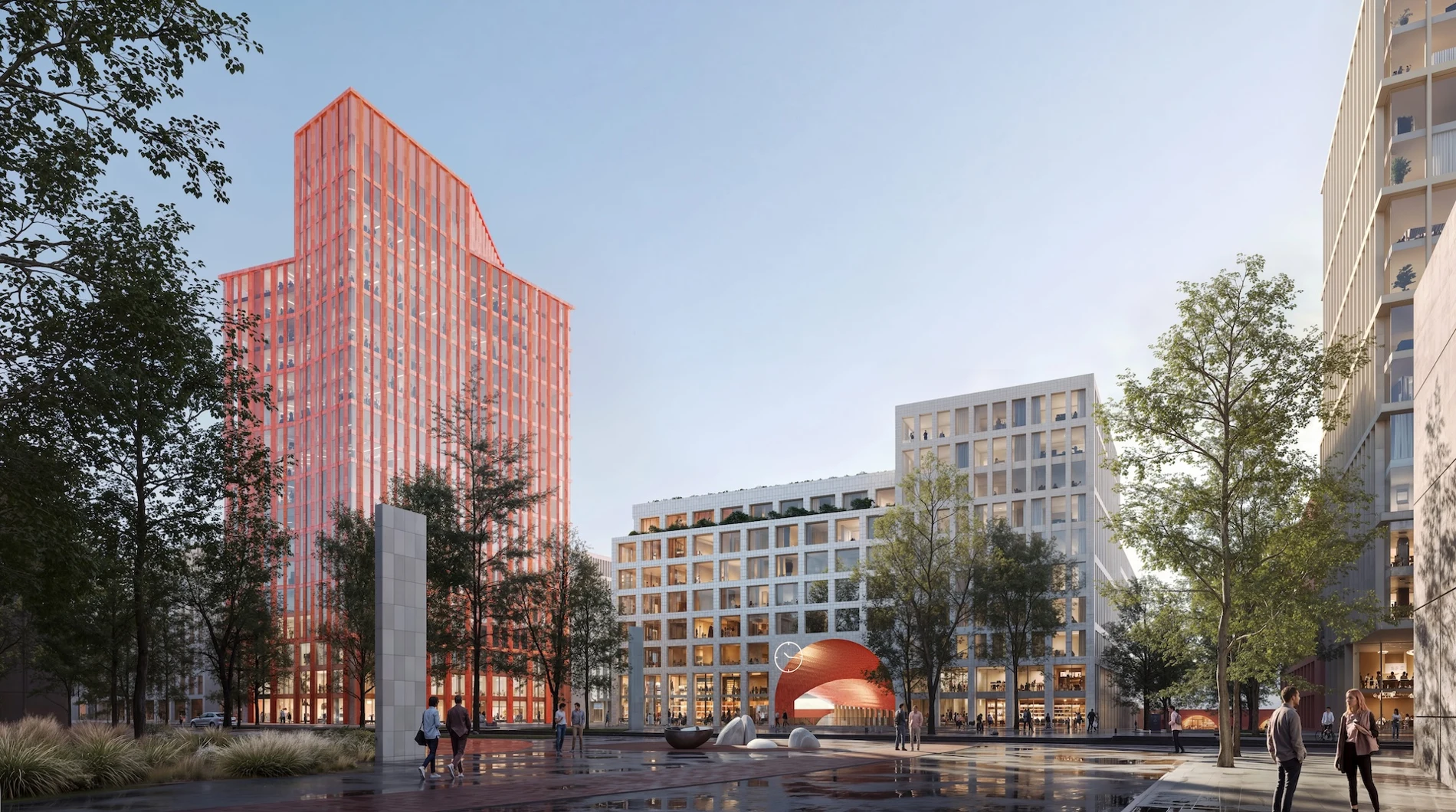
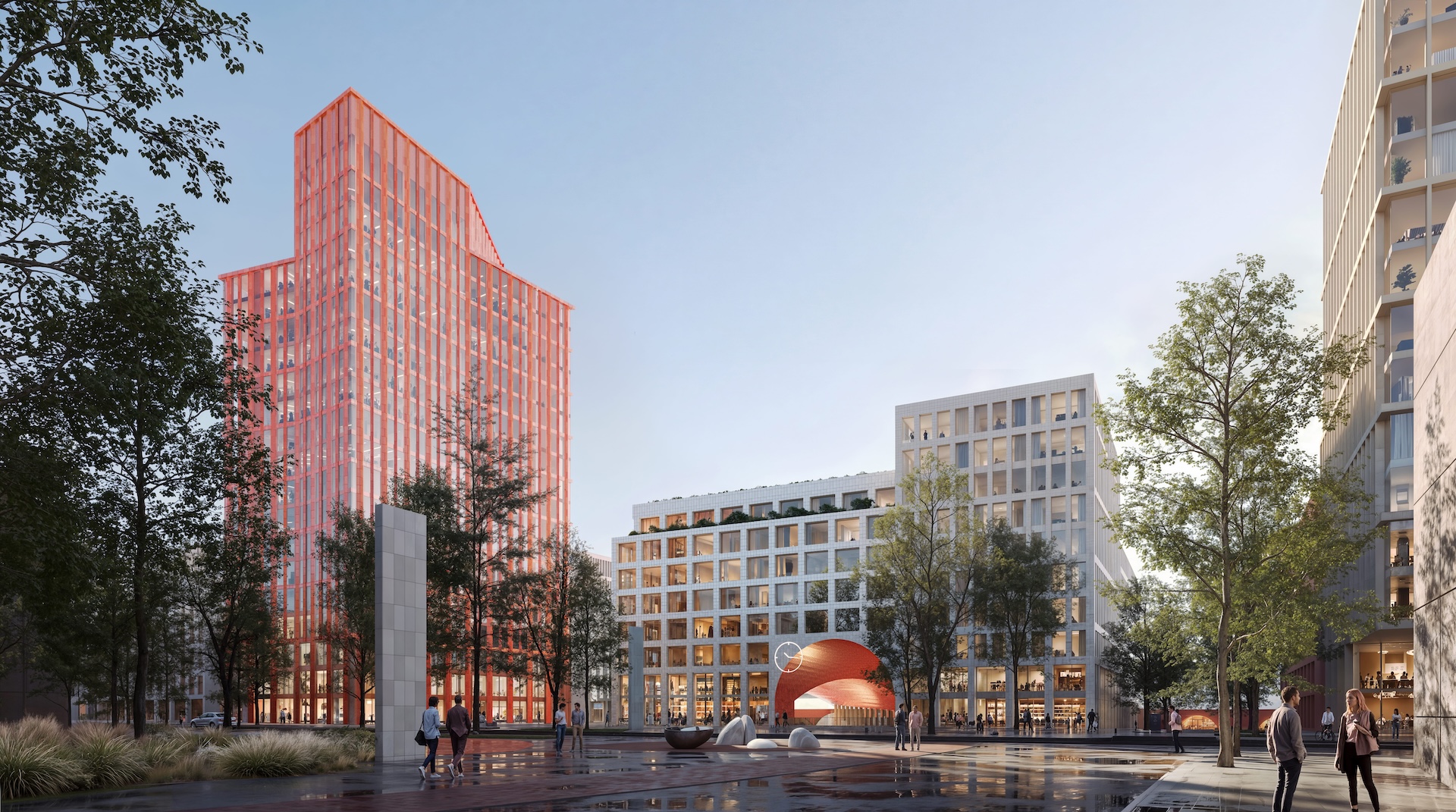
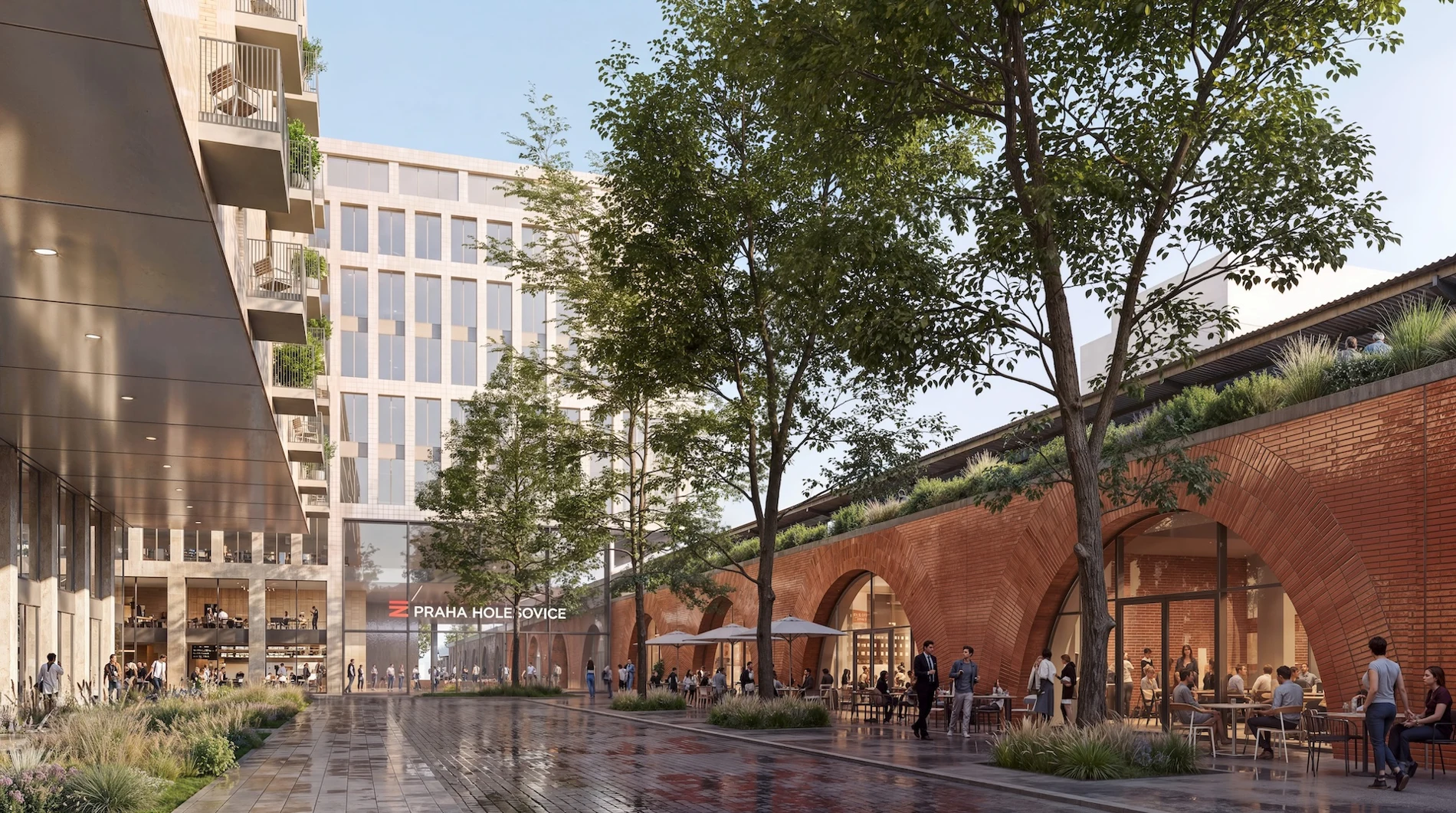
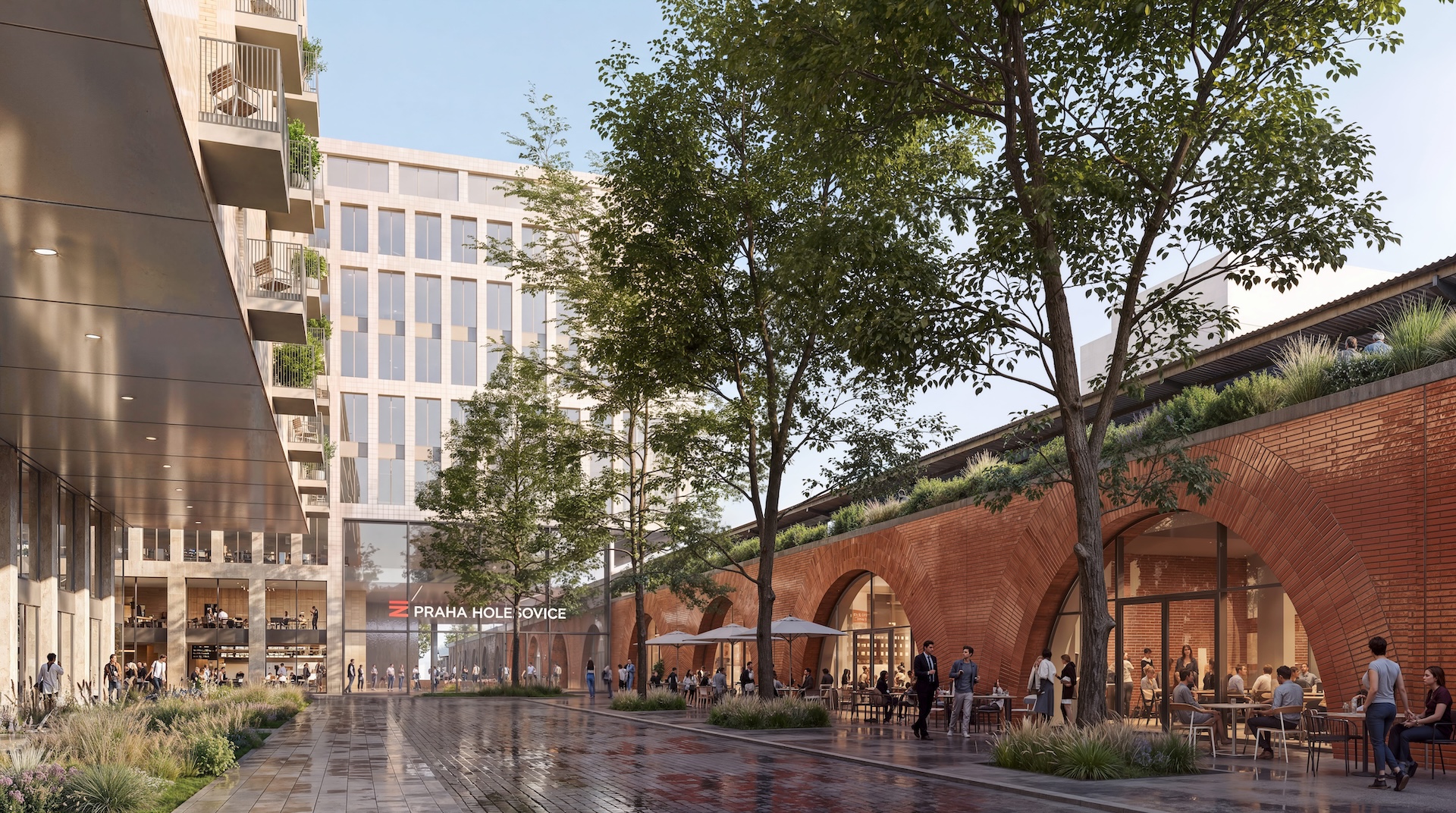
For passengers, the planned accessible, covered connection between trains and the metro is crucial. For neighbours, there is the possibility that the area around the station will become an ordinary part of their neighbourhood. Somewhere to meet, shop or pause for a moment.

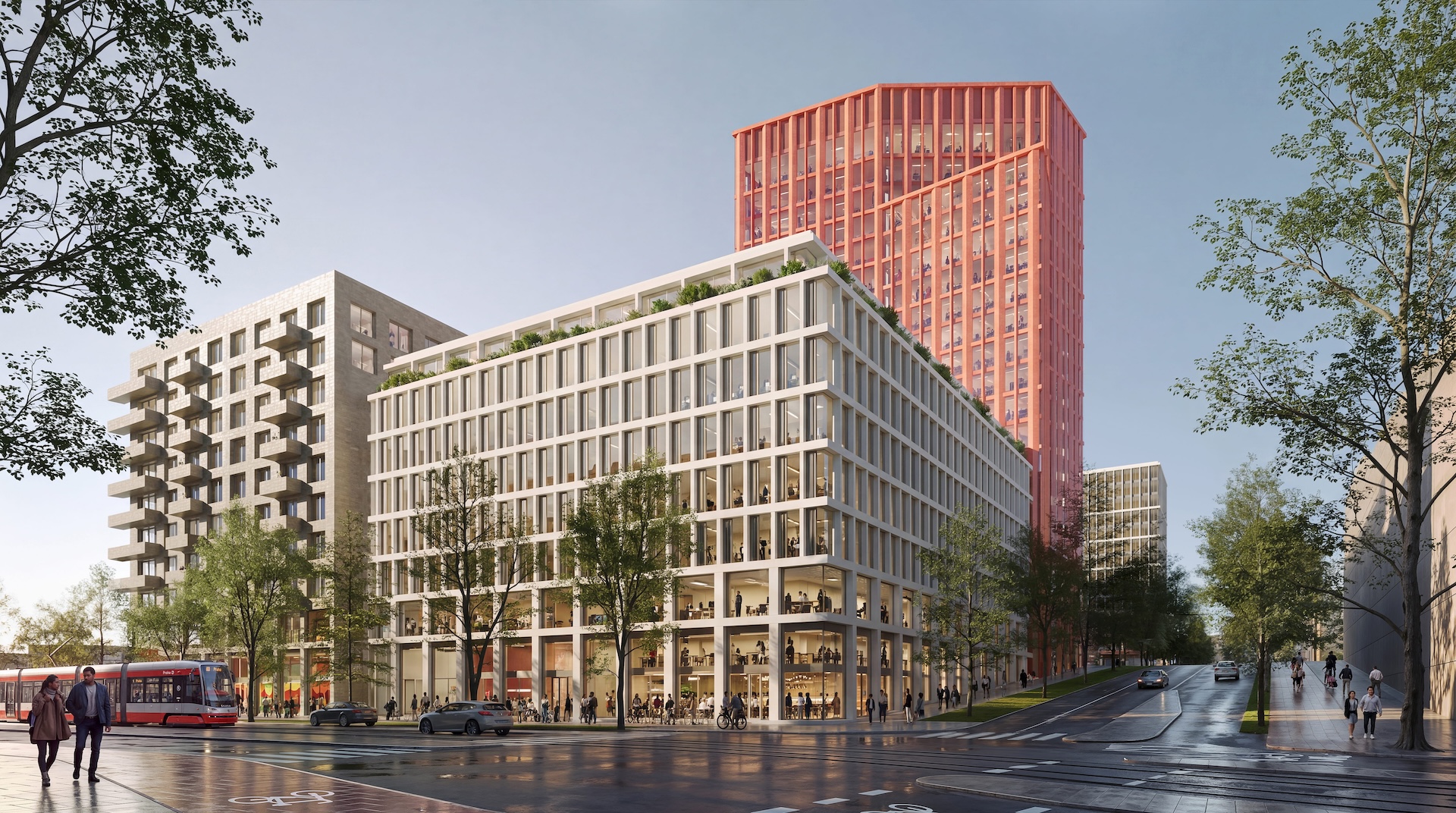
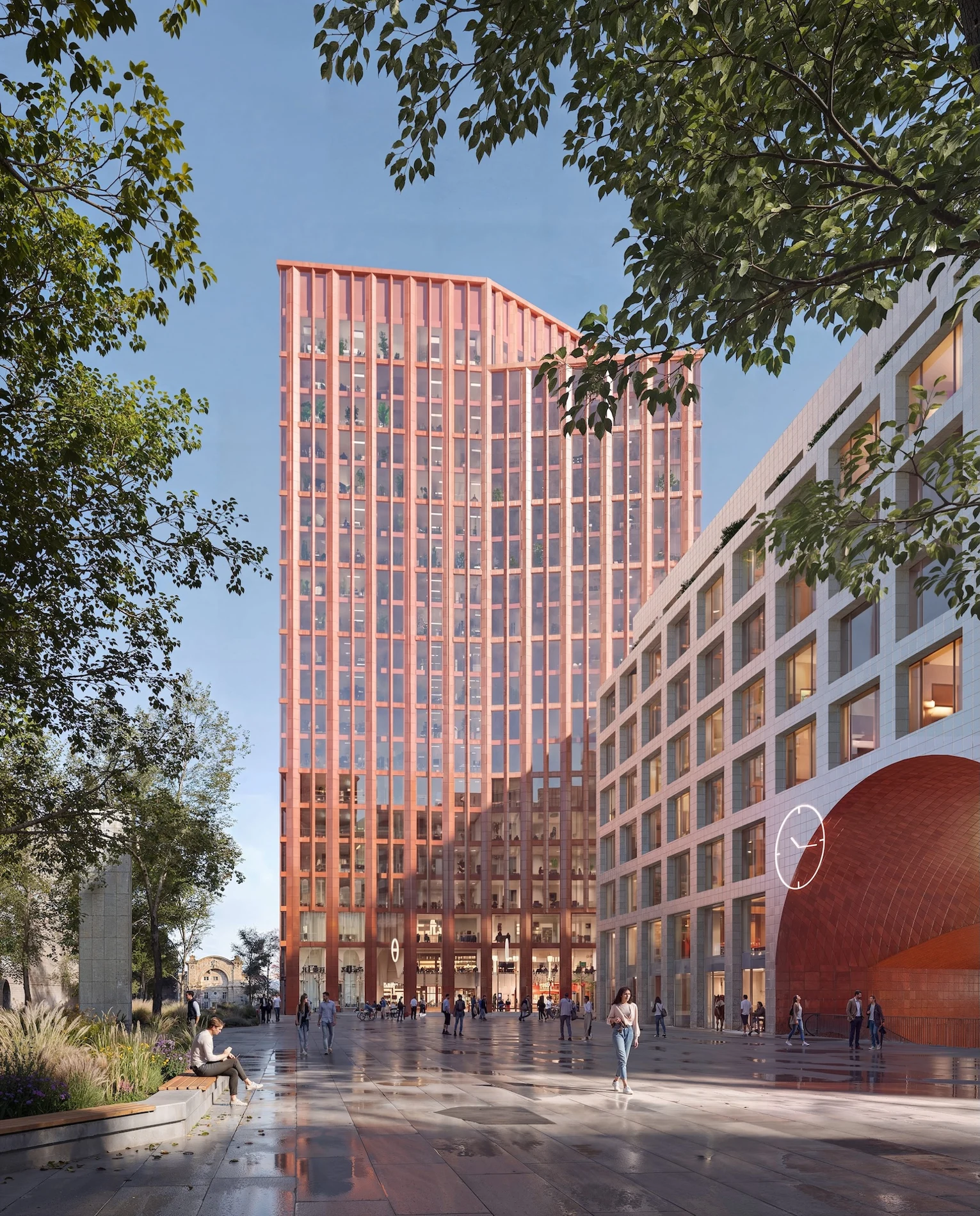
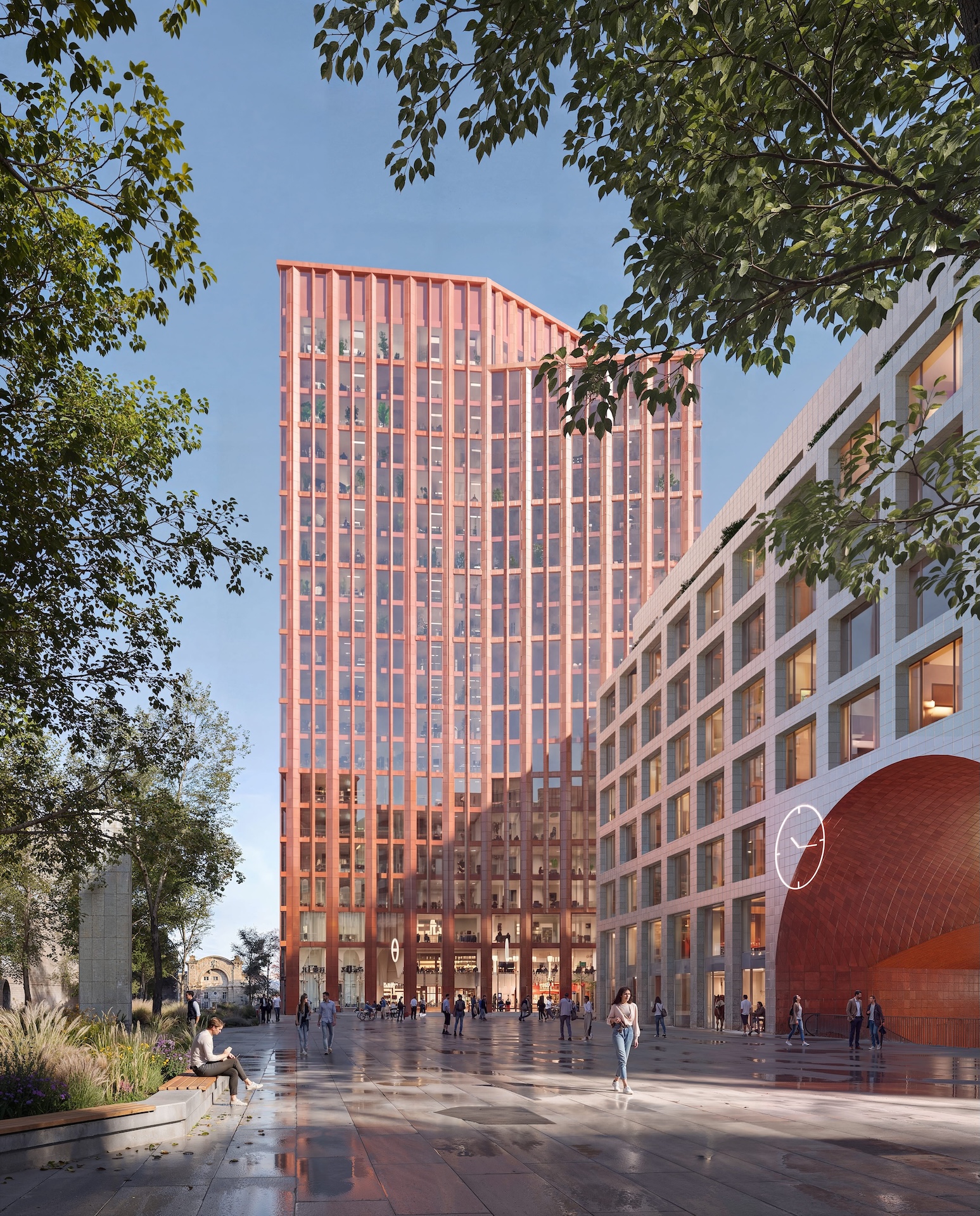
The competition proposal is not yet a final design or a construction schedule. The published materials on the competition result do not state total costs or a start date. Individual parts will be developed further. An exhibition of the proposals is due to begin on 5 October 2026 at Prague 7 Town Hall.
The future Bubny must preserve its memory, too
The historic station building has a different story from the new station. It is becoming home to the Bubny Centre for Memory and Dialogue, previously known as the Memorial of Silence. The site commemorates the deportation of almost 50,000 people classified as Jews under Nazi laws. The first transport departed on 16 October 1941.
CAMP’s overview, updated in July 2026, records reconstruction starting in 2025 and planned completion in 2027. Alongside remembering the victims, the centre’s purpose includes educational and cultural programmes. I believe it matters that this layer of the place remains a natural part of the new neighbourhood, rather than disappearing among stories of investment and new architecture.
How to picture the next ten years
The passage opened on 3 September 2024, the station in August 2025. This does not mean the surrounding development is complete.
The Metropolitan Plan has been in force since 1 September. The concert hall has applied for permission; Nové Holešovice has a winning design. Delarg has announced the start of construction.
The concert hall expects permission in the first quarter. CAMP gives 2027 for completion of the Centre for Memory and Dialogue; this is a planned date.
The project team gives the first quarter. This depends on permission, financing and the selection of a contractor. A detailed timetable of closures has not been documented.
This milestone concerns the concert hall, not completion of the entire new district.
Our ten-year outlook ends in 2036. The investor in central Bubny envisages development continuing until 2050.
2036 is not a shared completion date for Bubny. If the concert hall’s current schedule is met, it may have been operating for several years by then. At the same time, other parts of the area may still be under construction. The development that the investor envisages continuing until 2050 extends another fourteen years beyond our ten-year outlook.
The most realistic picture is therefore a gradual transformation: people may already be living and visiting the park in one place while construction continues a street away. This is an outlook inferred from the projects’ differing stages of readiness, not a published common construction plan.
What it means for us: the benefits will show in everyday life
For residents of Letná and lower Holešovice, better connections are the main opportunity. Shorter, more pleasant journeys to the station, the water, local services or neighbours. The benefits of the new district should also be available to people who will never buy a flat there.
For local businesses, new residents and visitors could mean more customers. The condition is that the streets really work and that ground-floor premises offer a varied mix of businesses. During construction, risks will include poorer access, dust, noise and more difficult deliveries.
For property owners and people looking for a home, the precise address and timeframe will become increasingly important. Living next to a finished park is different from spending several years opposite a building site. Improved surroundings may support interest in the area, but these plans do not honestly allow us to infer a specific increase in flat prices. The building’s condition, the flat’s orientation, noise and the actual progress of construction will also matter.
I see the biggest pitfall as getting the order wrong: homes completed before the necessary amenities, new barriers during construction, or attractive squares without life. I will therefore focus on transport connections, the opening of public spaces, and whether schools and services are ready for actual residents, rather than merely drawn into a visualisation.
My perspective
I see a great opportunity for Prague 7 in the transformation of Bubny. For me, the most compelling prospect is not the tower itself or a celebrated concert hall, but an everyday route between Letná, Holešovice and the river that finally makes sense.
At the same time, I would not want us to mistake a good design for a finished result. That will depend on coordination between investors, financing, transport and attention to everyday life during construction. I will therefore follow how the reality on the streets gradually changes. That is where we will see how much of the grand planning has actually become a better place to live.
Background materials, sources and further reading
An original synthesis of public information checked as at 24 September 2026. Future dates and capacities are plans stated by the institutions and investors named. Personal assessments are distinguished from reports on the projects.
- CAMP: Bubny–Zátory — urban planning study and capacities and Prague 7’s comments of 10 July 2026.
- Vltava Philharmonic Hall: application for permission and schedule, 31 August 2026, acoustic model, 3 September 2026 and official questions and answers. The differing budget figures are compared with the project homepage.
- Penta Real Estate: investment in Bubny, 13 August 2026.
- Prague 7: winning Nové Holešovice design, 17 September 2026 and ASB: squares, landmark and connections, 17 September 2026.
- Jakub Cigler Architekti: Bubny station and preparation for an extension above it and Prague 7: opening of Nicholas Winton Street, 3 September 2024.
- CAMP: Bubny Centre for Memory and Dialogue, updated 7 July 2026.
- TSK: summer repairs to Hlávkův Bridge and DPP: overview of transport works for summer 2026.
- Seznam Zprávy: concert hall costs and project management, 19 August 2026.
- IPR: Metropolitan Plan in force from 1 September 2026 and Prague 5: approval, issue and entry into force of the plan.
- CPI: 2026 half-year report, sections 3.3 / 6.4.3, copy on FinancialFilings, EP Real Estate’s acquisition of Karlín Group’s stake, 16 March 2026, CPI Rezidence: start of Delarg construction, 16 September 2026 and e15: investor collaboration at Nádraží Holešovice, 16 September 2026.